THE ASSOCIATION
The SPONSE Association is an international, nonprofit, technical society of engineers, architects, manufacturers, insurers, builders, planners, public officials, and social scientists, interested in the Seismic Performance Of Non-Structural Elements. SPONSE welcomes members from a wide range of backgrounds including research and teaching institutes, insurance groups, manufacturers of non-structural elements and individuals including engineers, architects, builders, practicing professionals, educators, government officials, and building code regulators.
THE MISSION
The objective of the Seismic Performance Of Non-Structural Elements (SPONSE) Association is to contribute to the improvement of the resilience of communities to earthquakes by (1) Promoting research related to the seismic performance of non-structural elements, (2) Promoting education and training on subjects related to the seismic performance of non-structural elements, (3) Assisting with the dissemination of research findings and technological developments relevant to the seismic performance of non-structural elements, and (4) Facilitating collaboration between industry, academia, professionals and other parties interested in the seismic performance of non-structural elements.
THE SUBJECT
The subject “Non-Structural Elements” is intended to include those elements within a building that do not form part of the primary load bearing system. It is common to distinguish between three different types of non-structural elements, as described below:
Architectural components
Architectural components are built-in nonstructural components that form part of the building. They include interior partition walls, parapets, chimneys, penthouses, suspended ceilings, appendages and ornamentation, signs and billboards, egress stairways that are independent of the building, cladding systems, window systems and lighting systems.
Mechanical and electrical components
Mechanical and electrical components are built-in nonstructural components that form part of the building. They include HVAC equipment, engines, turbines, pumps, compressors, pressure vessels, generators, batteries, motors, transformers, panel boards, switch gears, instrumentation cabinets, communication equipment, computers, cooling towers, piping systems, ductwork and electrical conduits.
Building contents
Building contents are nonstructural components belonging to tenants or occupants of the building. They include filing cabinets, bookshelves and all pieces of furniture found inside buildings.
THE BOARD OF DIRECTORS
The SPONSE Association currently has the following eight directors on its board:
PRESIDENT:
Gennaro Magliulo, University of Naples Federico II, Italy.
Gennaro Magliulo since 2018 is associate professor at the dept. of Structures for Engineering and Architecture at University of Naples Federico II, where he teaches two master degree courses: Precast Structures and Healthcare Facilities. Since 2025 he is affiliate researcher at the Construction Technologies Institute of the National Research Council. He was graduated in Civil Engineering, branch Structures, in 1997 with laude and got his Ph.D. in Engineering of the Structures in 2001. In 2001 he had a six-month post-doc position at University of Ljubljana, Slovenia, and between 2001 and 2002 he was visiting researcher at Technion in Israel. He has been tutor of 14 PhD students. He is currently member of the board of doctorate professors of the doctorate in Biology and Applied Sciences at University of Molise. He is author of 7 patents and more than 250 articles, more than 70 of them published by international peer reviewed journals. His research concerns earthquake engineering and dynamics of structures, nonstructural components, r/c structures and precast structures, in the fields of theoretical modelling, numerical analysis, experimental research and code activity. He has been principal investigator of about 40 research projects, funded by either public or private entities. He is founder and president of the SPONSE Association, and founder and vice-president of the American Concrete Institute (ACI) Italy Chapter. He is member of the fib committee TG 6.17 “Retrofitting and repairing of precast structures in seismic areas”.
VICE-PRESIDENT:
Rodrigo Retamales, University of Chile, Chile.
Rodrigo Retamales is a Civil Engineer from the University of Chile. Rodrigo received his PhD degree at the State University of New York at Buffalo in 2008. Rodrigo is currently lecturer at the University of Chile and the University of Los Andes in Santiago. Since 1999 he has developed more than 60 projects involving technologies such as seismic isolation and energy dissipation devices in South American countries such as Chile, Peru and Ecuador. Rodrigo was the president of the committee that updated the Chilean code for the seismic design of structures with base isolation, and also the president of the committee that developed the new code for seismic design of architectural and nonstructural components and systems. Currently, he serves as the secretary of the committee updating the Chilean code for the seismic design of buildings, which will include provisions for seismic performance based design of structures.

SECRETARY:
Kery Ryan, University of Nevada, Reno, USA
Kery Ryan
DIRECTORS:
Rajesh Dhakal, University of Canterbury, New Zealand.
Dr Rajesh Dhakal is a Professor of Structural and Earthquake Engineering at University of Canterbury, Fellow of Institution of Professional Engineers NZ (IPENZ) and a Chartered Professional Engineer (CPEng) in NZ. His research interests lie in seismic design of RC structures, seismic risk/loss assessments and seismic performance of non-structural elements. Prof Dhakal has authored more than 250 technical papers in different aspects of structural and earthquake engineering; and has received more than a dozen awards including the prestigious EQC-NZSEE Ivan Skinner award for advancement of earthquake engineering research in NZ, and NZSEE Otto-Glogau award (2007 and 2011) for publishing outstanding technical papers in the field of earthquake engineering. Prof Dhakal is a member of the management committee of the NZ Society for Earthquake Engineering (NZSEE), and currently serves as the Chief Editor of the Bulletin of the NZSEE.

Junwu Dai, Institute of Engineering Mechanics, China Earthquake Administration, China.
Junwu Dai received his Ph.D. in structural engineering from the Institute of Engineering Mechanics, China Earthquake Administration in 2002. His research has been primarily in the areas of seismic isolation on building structurs and cultural relics, shaking table tests on engineering structures and industrial instruments & structures, post-earthquake damage investigation, analyses and test of building structures, performance based seismic analyses, and seismic assessment on existing buildings. He is a member of Editorial Board of EERI and IAEE’s World Housing Encyclopedia, editor member of Earthquake Engineering and Engineering Vibration (Chinese Version), member in chief of the branch committee on structural test of Earthquake Reduction and Disaster Mitigation of China Architecture Society. He also serves as the group leader of the post-earthquake evaluation on direct loss of building structures in China Earthquake Administration.
Gilberto Mosqueda, University of California at San Diego, USA.
Giberto Mosqueda is an Associate Professor at the University of California at San Diego. He earned his Ph.D. in civil engineering from UC Berkeley in 2003 after a master’s at MIT and a bachelor’s from UC Irvine and he received an NSF Career award in 2008. Prof. Mosqueda’s primary research interests are in the experimental evaluation of large-scale structural and nonstructural components under seismic and other extreme loads. Current research projects focus on testing large-scale structural systems from the onset of damage through collapse using hybrid simulation and the development and verification of numerical tools to simulate structural response. Recent tests on earthquake simulators have examined limit states in seismically isolated buildings including pounding against moat walls and post-stability behavior of elastomeric bearings. New laboratory capabilities have also been developed for testing nonstructural components and medical equipment under more realistic loads including larger accelerations experienced in upper stories of buildings. The behavior of structures under multi-hazard loading is being examined, including the effectiveness of seismic design principles in mitigating collapse caused by blasts in steel buildings. Prof. Mosqueda served as the field investigation team leader for the MCEER Reconnaissance of the Gulf Coast following Hurricane Katrina and also participated in national teams investigating damage to structures and nonstructural systems following the 2010 Maule, Chile Earthquake and the 2011 Tohoku, Japan Earthquake and Tsunami.
Shojiro Motoyui, Tokyo Institute of Technology, Japan.
Shojiro Motoyui
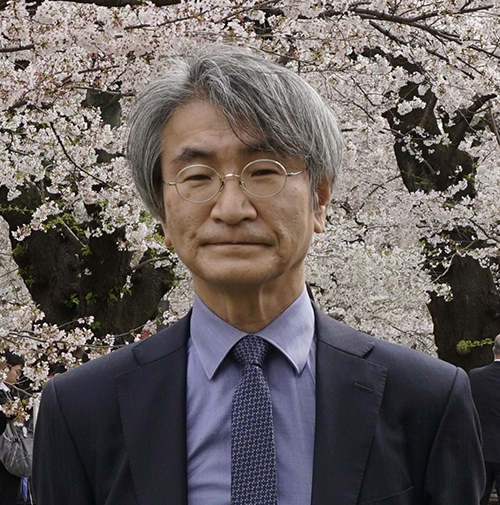
Timothy Sullivan, University of Canterbury, New Zealand.
Tim Sullivan is a Professor at the University of Canterbury. He has been leading research in Aotearoa New Zealand since 2016, principally through his role in QuakeCoRE. Before this, he was based in Italy as the head of the Design Methods Section of the European Centre for Training and Research in Earthquake Engineering, and Assistant Professor at the University of Pavia.
Tim's research interests lie mainly in the examination of the fundamentals of seismic design, assessment and retrofit, considering both structural and non-structural elements, as well as bridges. He is a member of the New Zealand seismic risk working group and has recently been contributing to the development of low-damage seismic design guidelines.
Tim is also a chartered professional engineer with the UK Institute of Civil Engineers, having worked in the UK, Aotearoa New Zealand, Germany and Italy on a wide range of building and bridge projects.
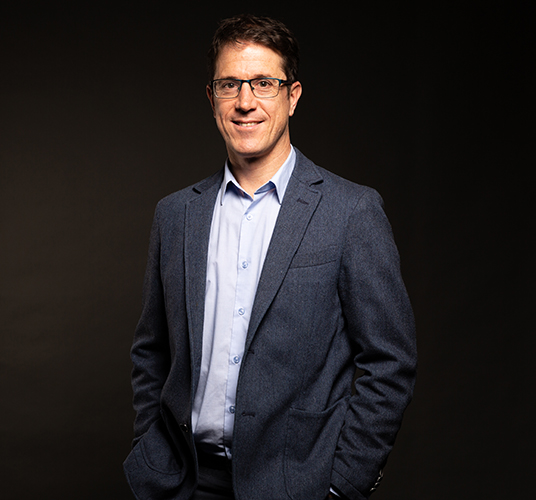
Peter Grzesik, Hilti, Liechtenstein
Peter Grzesik is a Code & Approval Manager for Direct Fastening Systems at the Hilti AG in Schaan, Liechtenstein, with experience in research, testing and qualifying construction fastenings since 2002. His focus research topic is the seismic and non-seismic behavior, qualification and design of connections between Non-Structural Elements and Structural Concrete or Steel Members. Peter is a Civil & Structural Engineer with a Master’s Degree from the Technical University of Munich (2001). Between 2002 and 2007, Peter served as test and approvals engineer for concrete anchors in Research and Development for Hilti in Germany. As Approvals Engineer, Lab and Technical Services Manager for concrete anchors at Hilti North America, Peter collected international experience between 2007 and 2010. Since 2011, Peter served as Segment Manager for Technical Marketing at the Hilti Headquarters in Liechtenstein, before assuming his current role as Codes and Approvals Manager for Direct Fasting Systems. In his various functions, Peter led and contributed to several research projects relevant to SPONSE, resulting in various conference and journal papers.
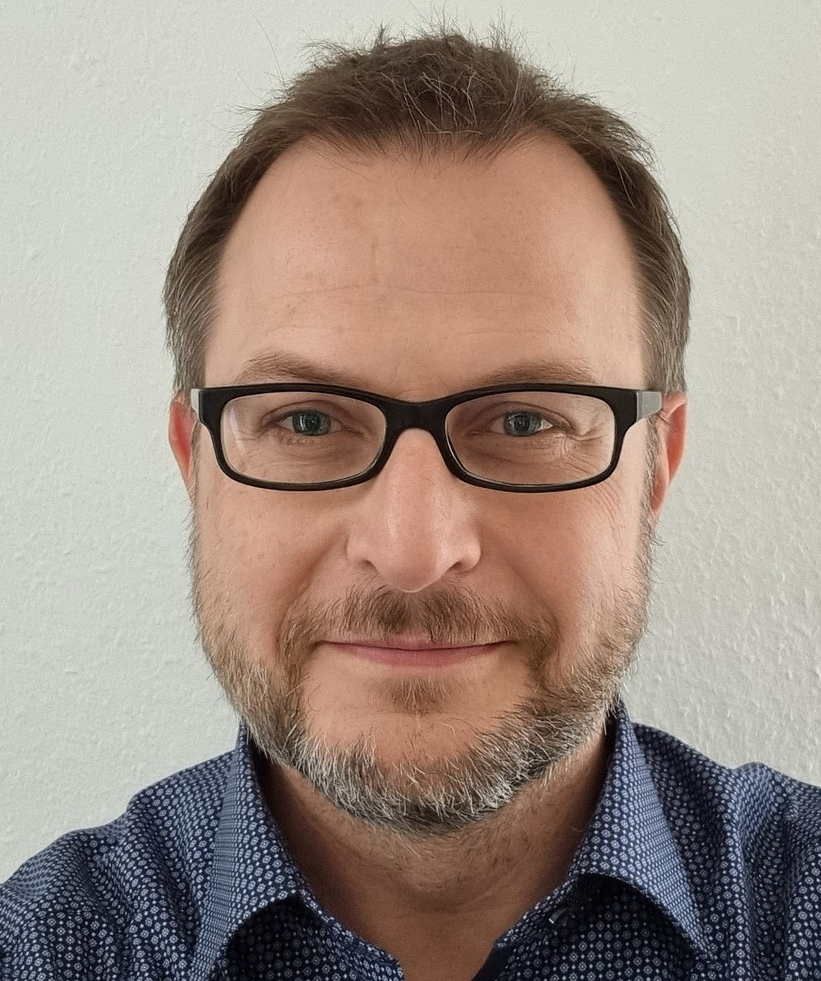
Maryann Phipps, S.E. Senior Principal – Estructure, Oakland, CA, USA
Maryann Phipps
Andrew Baird, Beca, New Zealand
Andrew Baird is a consulting structural engineer with Beca based in Bangkok, Thailand. Andrew specialises in the design of seismic restraints of non-structural elements, having received his PhD in Civil Engineering from the University of Canterbury in 2014. His doctoral research was undertaken during the 2010-11 Canterbury earthquake sequence and focussed on the seismic performance of cladding systems. Andrew now leads the seismic restraint design for numerous projects in New Zealand and Australasia, ranging from commercial office spaces to complex industrial, laboratory and hospital spaces. Andrew is passionate about developing practical and efficient seismic restraint design solutions for non-structural elements.
EXECUTIVE DIRECTOR:
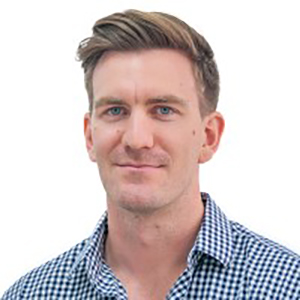
Daniele Perrone, University of Salento, Italy.
Daniele Perrone, Ph.D., is an Associate Professor at the University of Salento. He obtained his M.Sc. in Civil Engineering in 2010 and his Ph.D. in Materials and Structural Engineering in 2014. During his doctoral studies, he served as a Research Assistant at the Multidisciplinary and Multi-hazard Earthquake Engineering Research Center (MCEER) at the State University of New York at Buffalo, collaborating on the NEES Nonstructural project (Simulation of the Seismic Performance of Nonstructural Systems). From 2014 to 2019, he was a Postdoctoral Research Fellow at IUSS Pavia and collaborated with EUCENTRE Foundation. Since 2019, he has been the Executive Director of the International Association for the Seismic Performance of Non-Structural Elements. His research mainly focuses on earthquake engineering, with particular attention to seismic performance assessment and retrofitting of existing reinforced concrete and masonry buildings, as well as the seismic performance of nonstructural elements through experimental, analytical, and numerical methods. He is co-inventor of a patent and author of more than 150 publications in national and international journals and conference proceedings. Throughout his career, he has collaborated on, and in some cases coordinated, numerous research projects funded by public and private institutions in the field of earthquake engineering.